Graveyard Keeper 2 runs on four systems that feed one another. The official store page names them in four lines, and the devlogs flesh out the connections: the graveyard funds the operation, zombies do the labor, battles reclaim the land, and The Town turns freed streets into paying customers.
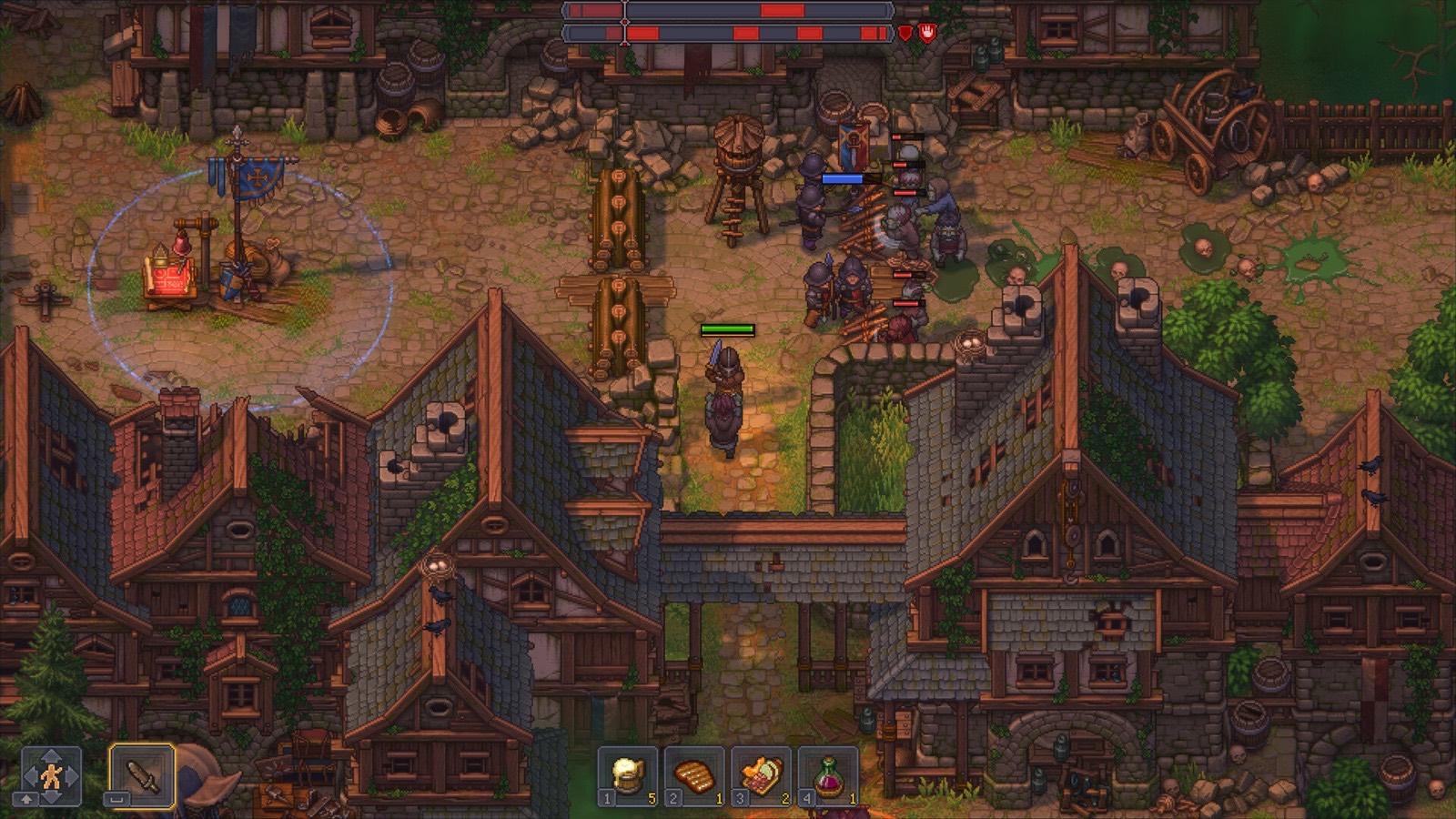
The four pillars
| Pillar | What it does | Feeds into |
|---|---|---|
| The graveyard | Bury corpses well, keep the grounds clean, hold sermons | Faith, silver, reputation |
| Automation | Zombies run machines and conveyor belts underground | Materials and goods at scale |
| The army | Weekly battles reclaim Town streets | Districts to rebuild |
| The Town | Restore houses and shops, serve the residents | Markets, sinners, better corpses |
The loop is deliberately circular: a more prosperous Town produces more sinful residents, and sin makes better corpses, which produce better zombies. The Town devlog states it outright: "The larger The Town grows, the more corpses you'll receive... The better supplied and more prosperous (and therefore sinful) The Town becomes, the better the corpses will be too."
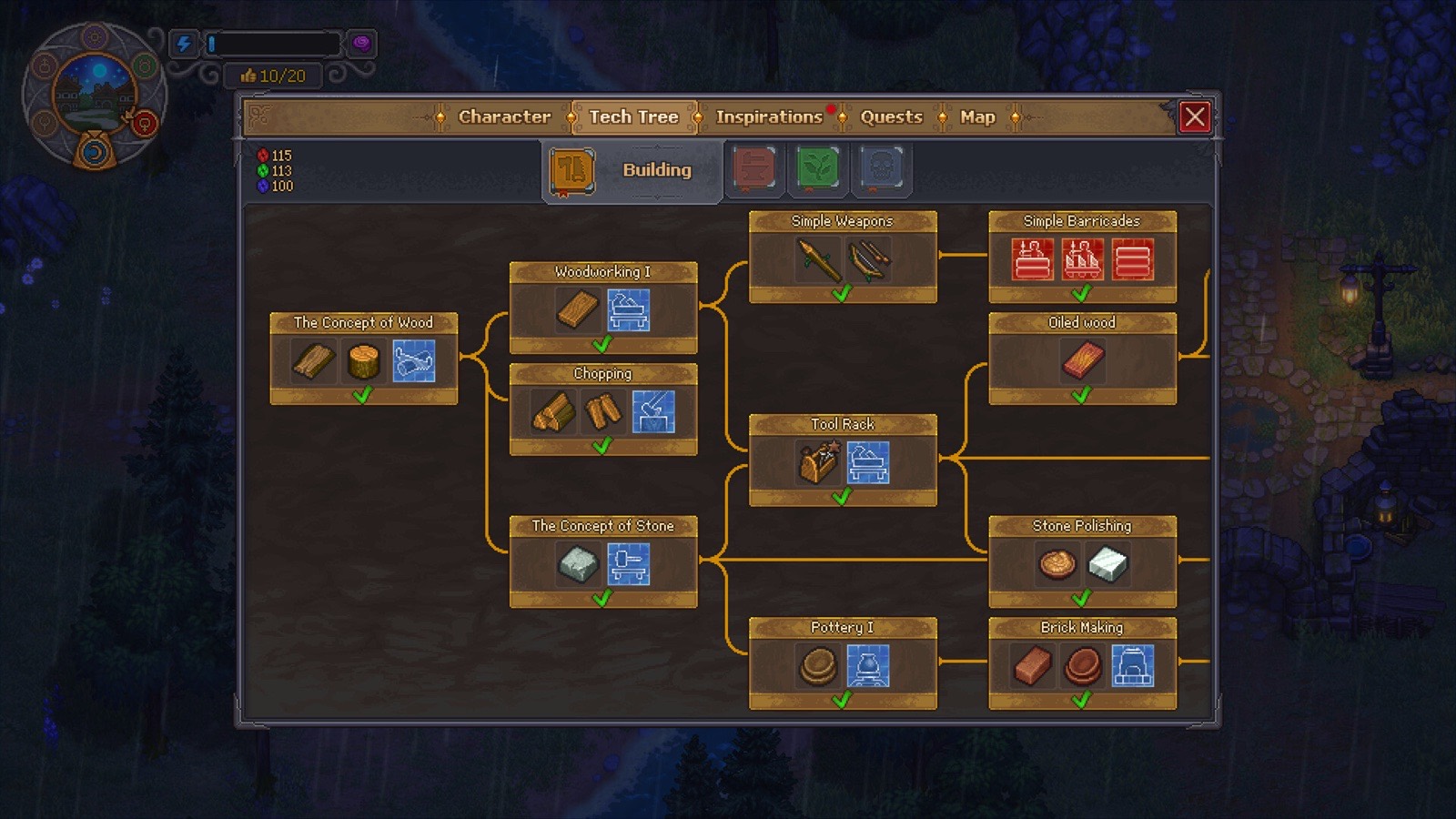
Tech tree and talents
The Technology Tree returns from the first game, now free of its 2D-era constraints (the art devlog is explicit that the old tree "was constrained by the limitations of 2D graphics"). Alongside it sits a new talent system that Lazy Bear describes as making "the grind you love so much more enjoyable", with the flat promise that "sadly, there will be less grinding this time". Inspirations, the research currency shown as its own menu tab in-game, feeds the tree; press coverage of the game pairs Perks with Inspirations as the two things you hunt.
Weekly cycles, not teleport bones
Two structural changes from the first game shape how you plan a week:
- Battles only open on a certain day of the week. The combat devlog is explicit that city battles are a weekly task. The sewers, which are open six days out of six listed, are the every-day combat outlet.
- Key NPCs stay put. In the first game, quest characters visited from The Town once a week. Now that The Town is in the game, they "will usually remain at their regular locations", but some mechanics tied to them only work on designated days.
Fast travel is handled by Milestones between unlocked locations. The Teleportstone from the first game is gone by design: "Plenty of players couldn't find it or figure out how to use it anyway," the story devlog admits.
See the town page for the rebuild loop, combat for battles, and the price page for what entry costs.
The state meters
Energy is back, and it now shares the screen with two pressure systems: a fatigue state that builds if you skip sleep for about two in-game days, and a purple meter that caps your energy and climbs as you handle corpses and work long shifts. Both are described in press guides rather than official pages, so their exact English names are not settled here; the tips page covers how players deal with them in practice.
FAQ
Do I need to play the first Graveyard Keeper first?
No, but the sequel treats the original's events as history you caused, and press reviews say the mystery lands harder if you played it. The series background page covers what changed.
Is there base building?
Yes, in two layers: your graveyard and workshop compound, and The Town itself, where you choose which buildings and businesses to restore.
How long is the game?
No official length estimate exists. The achievement list includes story milestones like "The End of the Journey", and the combat devlog's count of "a little over 4,000 zombies" across a playthrough hints at the scale.